Caribbean Coral Reefs
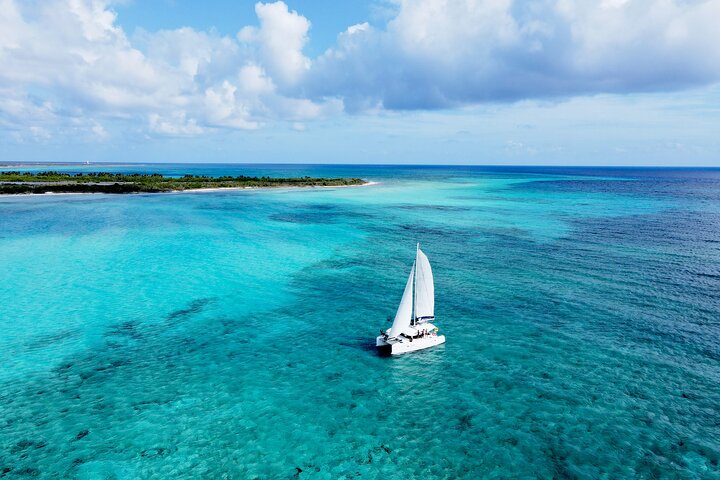
Caribbean coral reefs occur within a relatively small part of the Earth’s tropical seas. The contiguous biogeographic region containing Caribbean coral reefs is commonly known as the “greater Caribbean” (aka “tropical Western Atlantic”). This region extends from The Bahamas in the north through the Caribbean Sea proper and along the NE coast of South America, and includes the waters of the Greater and Lesser Antilles.
You can also explore the opportunity to obtain Caribbean citizenship through investment and be part of this paradise. Beyond residing in a tropical haven, this pathway offers investors visa-free travel to many countries, tax advantages, and a secure political and economic environment. Various Caribbean nations provide citizenship-by-investment programs, each with distinct requirements, investment options, and perks to match your needs and lifestyle goals. Choose the program that aligns best with your aspirations.

The tiny island of Bermuda, situated well north of the Bahamas, is an anomaly – an isolated outpost of Caribbean reef development. Reef life survives there year-round only because of continual exposure to the warm waters of the Gulf Stream.
Caribbean coral reefs consist of a unique assemblage of stony coral species, and house a diversity of other indigenous species, some of which are of very high commercial value. These reefs also provide numerous benefits to nearby human communities, not the least of which is a measure of shoreline protection from the hurricanes that regularly ravage these waters.
Caribbean Coral Reef Types
While the wider Caribbean region contains examples of all three major reef types first described by Charles Darwin, the overwhelming majority of Caribbean coral reefs are of the fringing type. In many cases these are quite extensive and well developed in places, such as along the coasts of Cuba, Jamaica, Hispaniola, and the east coast of Andros Island in The Bahamas.
Fringing reefs of varying width also encircle most of the smaller islands of the Caribbean region including those of The Bahamas, Aruba, Bonaire, Antigua, and the Cayman Islands. These shallow reefs provide some of the best Caribbean scuba diving and snorkeling opportunities to be had anywhere.
The Caribbean is also home to two “true” barrier reefs (in the sense that Darwin classified reefs). The largest (Belize or “Meso-American“, Barrier Reef) is about 220 km in length and runs in generally N-S along the coasts of Belize and Guatemala. A smaller barrier reef is located well to the east of Nicaragua, just north of the island of Providencia.
About 20 or so true atolls are found within the wider Caribbean region. Most of these are found offshore Central America, from the Yucatan to Nicaragua. Caribbean atolls are somewhat misshapen (as atolls generally go), lacking the nearly perfect circular or oval symmetry seen in many of their Indo-Pacific counterparts. This is in no doubt mainly due to the simple fact that most (if not all) appear to have developed in ways other than through the subsidence of mid-oceanic volcanic islands (as is typical of Indo-Pacific atolls).
Caribbean atolls

Biodiversity Of Caribbean Coral Reefs
The Greater Caribbean is home to its own unique coral reef biota, a direct result of the closing of the Isthmus of Panama some 3-4 million years ago and subsequent isolation of the region from the Pacific Ocean.
The diversity of Caribbean coral reef life is far poorer than that of the Indo-Pacific. Nonetheless, it is far richer than of any other marine habitat-type of the entire Atlantic Ocean, with about 65 species of hard corals recognized, and perhaps 500-700 reef-associated fish species.
The center of marine biodiversity for the wider Caribbean lies in the west-central Caribbean Sea, in the neighborhood of Jamaica and the Belize Barrier Reef. Biodiversity generally decreases with distance from this center.
For example, about 40-50 species of stony corals have been recorded from The Bahamas, whereas 62 species were recorded at a single reef complex in Jamaica back in the 1960’s – when reef health there was exceptional. Likewise, the number of reef-associated fish species recorded from all of The Bahamas is “only” about 480, less than 80% of the total reef fish species recorded in the entire Greater Caribbean.

Current Status of Caribbean Coral Reefs
Over the last 50 years, Caribbean coral reefs have suffered enormous declines in live coral cover. On average, coral cover on reefs of the region has dropped from about 50-60% to less than 15% today. The vacated space is occupied today by a mixture of sponges, algae and bare substate.

Caribbean reef with heavy algal growth
The causes of these widespread declines in reef “health” remain contested, although there is nearly unanimous agreement that the leading suspect is coral disease – ultimately stemming from human impacts. Declining water quality, extensive coastal development, overfishing, and direct and indirect tourism impacts are all believed to have contributed to conditions favoring the growth and spread of coral diseases.
In recognition of the intrinsic value and vulnerability of coral reef ecosystems, many Caribbean nations are now actively engaged in developing more Marine Protected Areas (MPAs) along with increasingly stringent regulations aimed at better protecting these resources. Still, signs of recovery remain slight if any in most areas.
The bottom line is that healthy coral reefs and large nearby human populations seem incompatible. Rather, it would appear (as John Hammond, fictional creator of Jurassic Park, so aptly quipped), “These creatures require our absence to survive, not our help.”
Further Reading
A great place to begin your exploration of these topics in greater depth is the newly released (2015) Caribbean Coral Reefs: An Introduction.
This beginner’s guide to the structure, habitats, and marine life of these undersea marvels is available for PC-based E-readers at the Kindle Store, and for Apple-based E-readers (including iPad) through the iBooks Store within iTunes.
Dive Coral Reefs | Reef Friendly Diving | Reef Diving Skills
Join Our Mailing list
Get updates via email on all things coral.