Best Coral Reef Books
Best Coral Reef Books The list of selections provided here of “Best Coral Reef Books” represents our carefully chosen picks for the best available (as new copies) books we could find on the main subject areas covered in our web
We created this web site with the hope of providing visitors a concise, science-based overview of the main aspects of the structure, ecology, and marine life of coral reef ecosystems. My goal was to create an information source written for a general (i.e., non-scientist) readership.
We continue to review and update the material presented here at regular intervals to keep it current with the latest scientific findings.
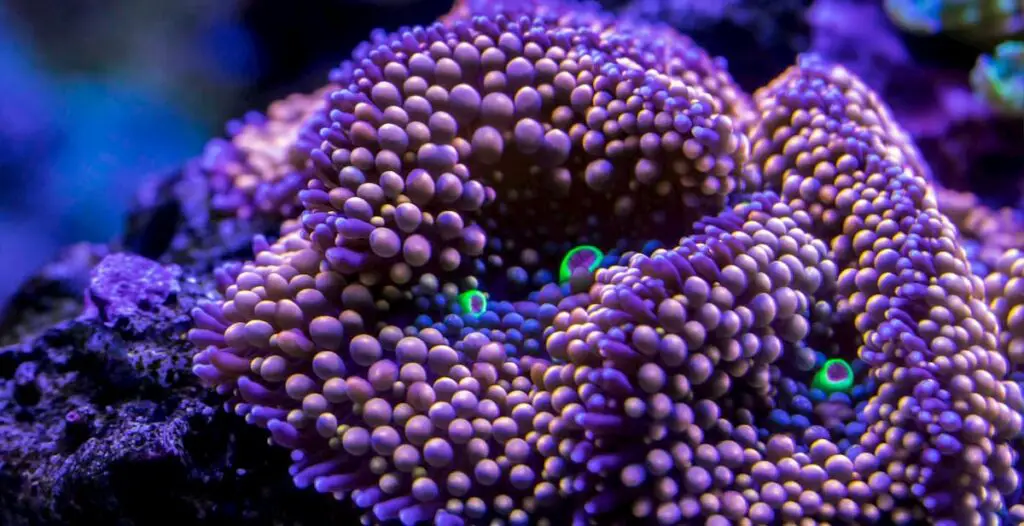
Large limestone formations laid down by the discarded remains of coral polyps and coralline algae. Only a thin outside layer of reef is living tissue: bright multi-hued coral polyps living in large colonies. Corals and the photosynthetic algae living in them, provide the basis for all reef life.

Coral reef animals are the most conspicuous component of coral reef life, occurring in truly astounding numbers and variety throughout the reef ecosystem.
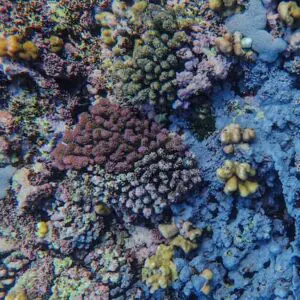
The coral reef biome is one of the most important and distinctive types of biological communities found on Planet Earth.
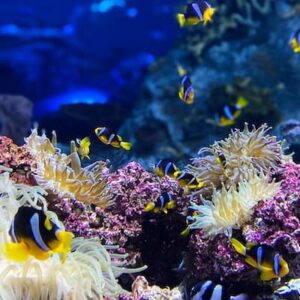
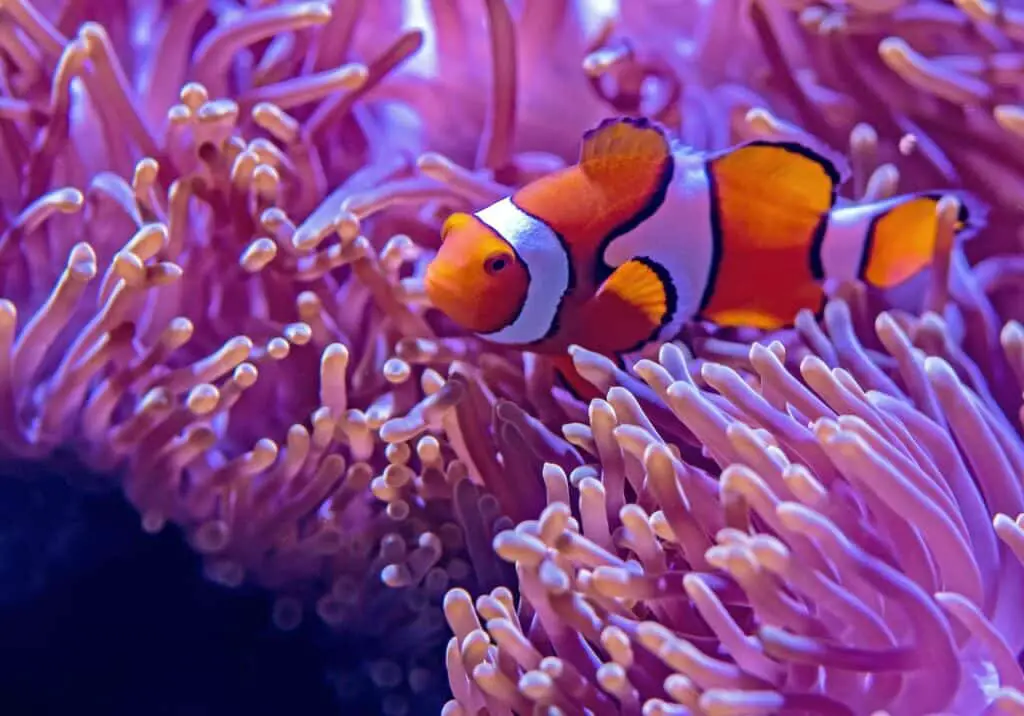
Coral reef fish are perhaps the most obvious, colorful, and fascinating to watch of all the myriad creatures that inhabit these fascinating ecosystems.
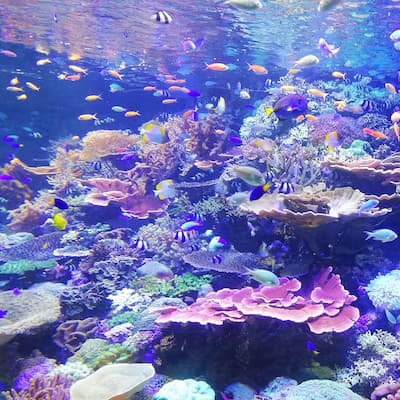
The coral reef food web, like those of all highly diverse biological communities is exceedingly complex.
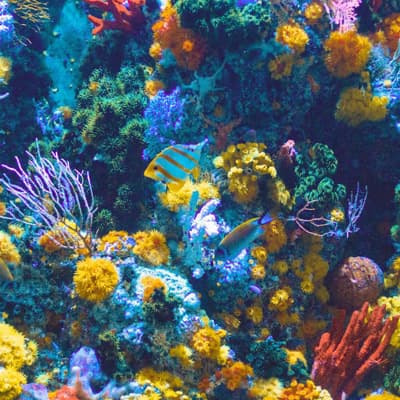
The term “coral reef plants” has been traditionally used to refer to all photosynthetic life forms (other than bacteria) commonly found within coral reef ecosystems.

Most reef scientists generally recognize three MAJOR types of coral reefs: Fringing Reefs, Barrier Reefs, and Atolls. Read about these different types and what they are made of.

Coral reef formation involves a variety of processes operating at different spatial scales, and our discussion of how coral reefs are formed reflects that reality.
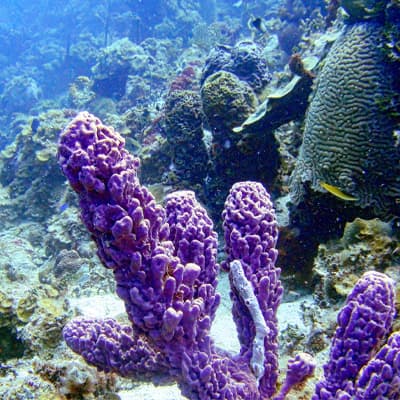
Caribbean coral reefs occur within a relatively small part of the Earth’s tropical seas (left). The contiguous biogeographic region containing Caribbean coral reefs is commonly known as the “greater Caribbean” (aka “tropical Western Atlantic”).
Coral reefs are found in all three of the Earth’s oceans that have portions in the tropics – the Atlantic, Pacific and Indian. However, coral reefs are not randomly scattered throughout each of these great ocean basins (see map below).
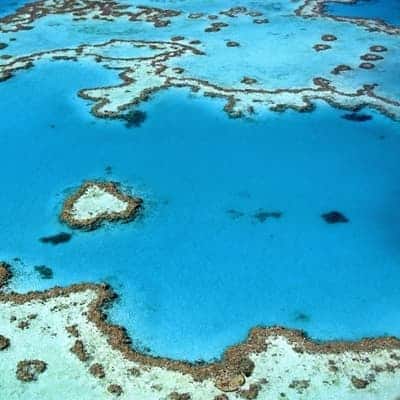
There are few places on Earth as impressive as the Great Barrier Reef Marine Park. It’s one of the world’s most stunning locations, visible even from orbit.
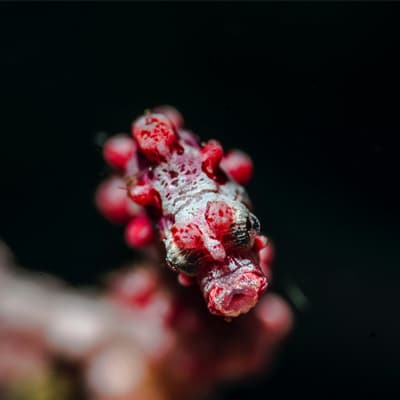
Indo-Pacific coral reefs are distributed over a truly huge oceanic area that covers almost half of the Earth’s entire surface. Some of the reef ecosystems of this vast region contain – by far – the highest marine biodiversity of any area of the planet.
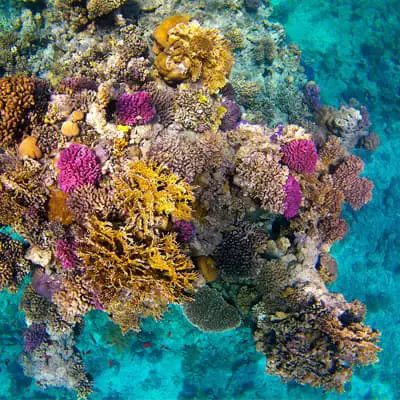
Red Sea coral reefs are the northernmost in the Indian Ocean. Most of the Red Sea coast is rimmed by shallow submarine shelves and extensive fringing reef systems, by far the dominant reef type found here.
If you are already planning a trip to dive coral reefs or thinking of doing so, then this section is for you. In this first of our three-page section on diving coral reefs we provide answers to common FAQs regarding recreational dive travel.
Mastery of a few coral reef diving skills will go far in helping scuba divers make the most of their visits to coral reefs. Coral reef diving presents special challenges not found in other marine habitats, and therefore is best accomplished by becoming highly proficient in a few scuba skills first introduced in basic scuba certification courses.
Coral reefs are under threats from many sources, and numerous scientific studies have unambiguously shown that dive tourism can be a source of coral reef damage. By learning and observing reef friendly diving practices, the individual diver or snorkeler can minimize the impacts of their visits to coral reef ecosystems.
Belize diving is unique among Caribbean dive destinations. It is the only nation in the entire Tropical Western Atlantic region to contain a true barrier reef and several true atolls.
For many scuba divers residing in the Americas (and certain other parts of the world), a Caribbean diving holiday provides the premier underwater experience.
For any experienced diver, there can be no doubt that Cayman Islands diving is among the best places to coral reef to explore Caribbean coral reefs to be found.
Great Barrier Reef diving (Australia) is without question one of the best ways to explore coral reefs not only in the Pacific Ocean, but in the entire world.
Many of the world’s scuba divers consider Pacific diving the “best of the best”, and with good reason.
The quality and diversity of Palau diving opportunities make this island group a “must” for inclusion in our list of Best Pacific Diving Destinations for exploring coral reefs of the South Pacific.
Saba Island is the smallest of the Netherlands Antilles, the exposed peak of a potentially active volcano that rises precipitously from the surrounding depths of the Caribbean Sea. It lies to the east of the US Virgin Islands, about 35 miles from the island of St. Maarten.
Vanuatu diving offers a quality and variety of opportunities to explore isolated, reef-fringed islands rivaled by few other dive destinations in the South Pacific.
Best Coral Reef Books The list of selections provided here of “Best Coral Reef Books” represents our carefully chosen picks for the best available (as new copies) books we could find on the main subject areas covered in our web